
Part of the backstory of both The Medway Wolf and Ghosts of Oaklight Hall is an alternate timeline featuring a recent war between the United States and the British Empire. That doesn’t mean I’m anti-American: I most definitely am not.
I wanted my main character in The Medway Wolf to be someone recovering from the trauma of recent war and the loss of his gay lover. In the 1890s, when my story takes place, there wasn’t a real conflict that would’ve fitted the bill.
There were wars—against the Boers and Zulus—but I wanted an industrial war where the might of the British Empire was seriously challenged. I could have brought the First World War forward by a couple of decades, which would’ve been credible, but I felt that would’ve been lazy. At the time of writing, I thought it would be more fun to visualise a war with the largest non-European power at the time instead: the United States.
British-American Wars: Historical Context
This war isn’t as fanciful as it perhaps seems. Britain and the United States have fought each other twice before.
The American War of Independence came first, when Britain decided the American colonies weren’t pulling their weight in defending themselves after the cost of the Seven Years War, and responded with additional taxes on the colonies. It’s an argument that sounds eerily familiar whenever Donald Trump talks about Europe’s contributions to NATO’s defence…
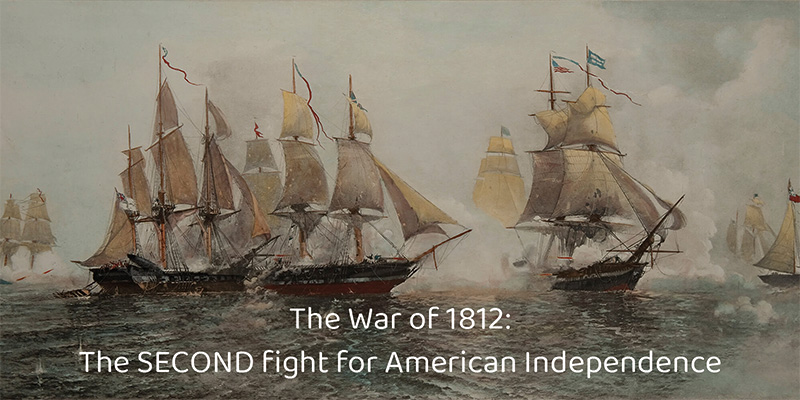
The War of 1812 followed, when the United States tried to annex Canada, rather than making Canada the 51st state (or rather the 19th in 1812). All that war achieved was the British burning down the original White House, plus the two powers eyeing each other warily across the Atlantic. Basically, Britain and the United States were even.
Near Conflicts: the Trent Incident and Civil War Tensions
Hostility nearly broke out again in 1861 after the start of the American Civil War when the US intercepted a British ship to arrest two Confederate officers. The US later backed down and released the officers, and conflict was avoided (the Trent Incident).
Britain’s behaviour over the Civil War does us little credit. Although we’d abolished the slave trade decades before, commercial interests still took priority. The US blockade of the Confederacy caused a cotton famine in British manufacturing, and Britain responded by supplying arms, uniforms, and even warships (the Alabama) to the Confederacy.
In real history, Britain would have been unlikely to declare war on the Union States unless they could’ve secured France’s support. But France had its own preoccupations at the time, so outright war was never really likely.
After the Civil War ended, Britain agreed to pay compensation for the damage caused by Britain’s supply of warships to the Confederacy.
Creating an Alternate Timeline: the Venezuelan Crisis
In my timeline, I have skated over this and postulated that our misplaced interference would’ve caused simmering resentment in the US and led to further conflicts.
A potential flashpoint for such a conflict occurred in the 1890s when Venezuela attempted to annex Essequibo province, now part of modern Guyana. This issue has returned to the fore recently under the Maduro government.
Venezuela appealed to the United States. Under the Monroe Doctrine, the US didn’t want European interference in what it considered its sphere of influence. (Funny how this too sounds familiar…)
I’m a believer in the adage that, although liberal democracies go to war, they rarely go to war with each other, recognising that the cost is simply not worth it. This issue was again settled in Britain’s favour by arbitration. But in my alternate timeline, it’s possible that this could’ve been the trigger that led to a destructive war.
Who Won the Imaginary War?
I pictured my protagonists as fairly evenly matched. In the First World War, the Royal Navy’s firepower was severely undermined by the poor accuracy of its gunfire. It was said the Royal Navy had spent the time since Trafalgar polishing their guns while the Germans spent theirs practising firing them. I’ve adapted this in my stories by replacing the Germans with the Americans knocking hell out of the British fleet and… Well, you have to read it to find out more.
In contrast, I have the British army get the upper hand on land in recapturing Alaska, leaving the war in something of a stalemate but with the potential for further conflict.
It’s often fun to play ‘what if?’ Who do you think would’ve won this war? And if you’d like to experience this alternative history for yourself, go ahead and read The Medway Wolf.
Leave a Reply